My three-step frame
Build a timeline
I begin by inviting you to pick one concrete decision that matters in your context, such as completing a form or choosing a plan. Together we outline the exact steps from first thought to final confirmation, including any waiting periods. This Shared Timeline gives us a common base, free from jargon, and makes it easier to spot where people might quietly drift away.
Tag the signals
With the Shared Timeline visible, we mark each point where the person receives a signal: a message, a screen, a conversation, or even a queue. For each signal, we note whether it likely feels rewarding, neutral, or punishing. This step, which I call Signal Tagging, turns vague hunches into structured observations that can be compared and discussed.

Adjust with care
Finally, we select a small number of places to test gentler, clearer reinforcement, such as shorter delays, simpler language, or more honest previews of outcomes. I suggest ways to observe what changes, without promising specific results. This phase, Gentle Adjustments, is about learning what your environment is actually teaching people to do, then deciding which lessons you are comfortable reinforcing.
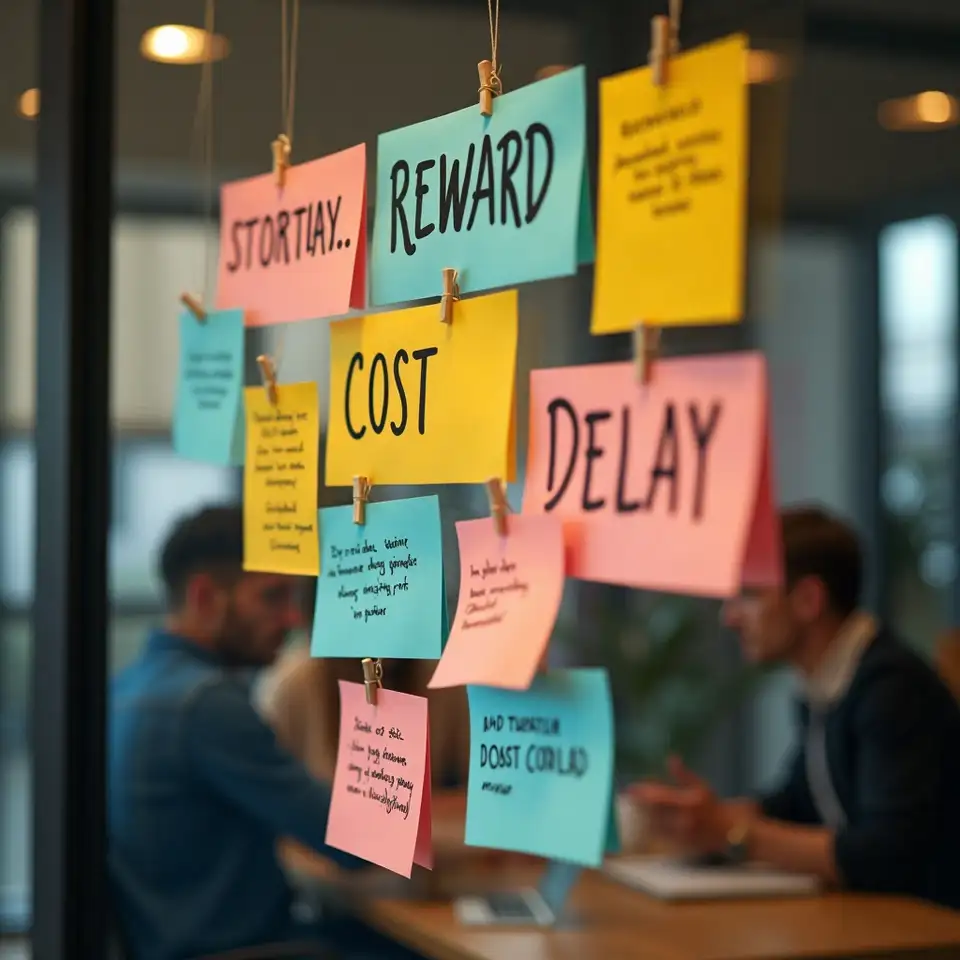
If you want to explore how Shared Timelines, Signal Tagging, and Gentle Adjustments might apply to your own setting, you can describe one decision flow, and I will reply with questions and possible next steps.

Feeling the feedback
Emotions as early reinforcement signals deserve as much attention as formal outcomes when you review choices.
In my work, I often start by asking a simple question that rarely appears in reports:
how did this decision feel at each step. Feelings are not separate from reinforcement;
they are often the first signals the brain records. Confusion, relief, pride, or
annoyance can all act as rewards or costs, shaping what happens next. By honouring these
emotional traces alongside numbers, you gain a fuller view of why behaviour repeats or
fades.
Share a case

Field notes
Everyday signals
Three years ago, I would stand in busy Indian markets and wonder why some stalls drew long queues while others stayed quiet, even when prices and products looked similar. Over time, I realised that past experiences were silently shaping present choices. A friendly greeting remembered from months ago, a quick resolution of a past issue, or a single moment of confusion could all act as reinforcements, teaching people which paths felt safe and which ones felt risky.
When I talk about reinforcement learning in this context, I am not referring to
complex code. I am talking about how repeated experiences teach people to favour
one path over another. If a particular route home feels faster and less
stressful, it becomes the default, even if it is not always objectively best. If
a digital form is painful once, many will avoid it later, even after
improvements. These patterns do not arise from perfect logic; they grow from
lived experience.
Reinforcement in the wild
These scenes from daily life capture how repeated experiences, not just one-time events,
teach people which economic paths feel safe enough to follow again.



Why reinforcement thinking helps
Reinforcement learning sounds technical, yet at its core it asks a simple question about economic life in India: what are people being taught to repeat through the rewards, delays, and frictions they face every day.
Make economic outcomes more understandable
When I compare decision environments from a few years ago to those I see now across Indian cities, one contrast stands out. Earlier, many systems delivered outcomes with little explanation; today, more people expect to know how and why a result appeared. I focus on this expectation for transparency, using reinforcement learning ideas to trace which signals after a choice actually help people understand consequences. By mapping rewards, delays, and small frictions, I can highlight where confusion is quietly teaching avoidance, and where clear feedback is teaching trust. This is not about complex prediction; it is about honest cause and effect that people can feel. Past performance does not guarantee future results, yet better feedback can reduce unpleasant surprises.
Transparency
Respect regional and social differences
I have watched how the same incentive can land very differently in diverse parts of India. A small time saving might be more valuable than a modest payment for someone with long commutes, while another person might prioritise predictability over any extra gain. Rather than chasing one perfect incentive, I look at the full mix of reinforcements people experience: social approval, effort saved, clarity, and material outcomes. Using an internal approach I call Context Circles, we consider these layers together before changing a design. This helps you avoid over-relying on any single lever and respects varied motivations without romanticising them. Results may vary across regions, and that variation itself becomes useful information.
Context
Soften sharp shocks in long decisions
Economic decisions often stretch across months or years, while feedback tends to arrive in jolts: a sudden bill, a surprise bonus, or an unexpected rule change. I pay special attention to these jolts, because they can reshape behaviour far more than routine days. With a method I refer to as Jolt Mapping, we chart where sharp changes in outcome or information appear along a timeline, and how people respond afterward. This view helps you decide where steadier signals, clearer warnings, or gradual transitions might protect people from abrupt shocks. There are no promises that volatility disappears, yet acknowledging and softening these jolts can reduce avoidable distress.
Stability
Keep ethics close to reinforcement design
Behind every reinforcement design sits an ethical choice about whose behaviour is being encouraged and for whose benefit. I keep this question visible, especially in settings touching money or health. Before suggesting changes, I ask what future behaviour we are likely to reinforce and how people might feel about that behaviour months from now. This Ethical Lens step does not solve every conflict, but it slows down hasty decisions that might pressure people into actions they later regret. I also highlight uncertainty directly, repeating that results may vary and that past performance does not guarantee future results. This realism protects you from overconfidence while still allowing careful experimentation.
Ethics
Reinforcement across timelines
Looking back a few years, many conversations about economic choices in India focused on
big events: a major purchase, a new job, or a sudden policy change. Now I see more
attention on the smaller, repeated actions that quietly shape financial and everyday
stability. Reinforcement learning offers a way to think about these small actions by
examining how the world responds each time, through rewards, delays, or discomfort. On
this page I explore how those responses, or feedback signals, can be adjusted without
making unrealistic promises. When a person pays a bill, does the system simply confirm
success, or does it also highlight progress in a way that feels calm rather than pushy.
When someone hesitates before committing to a long-term plan, do they receive clear
explanations, or only vague encouragement. Each of these moments teaches a lesson about
whether similar choices are worth repeating. I work with an internal three-part
approach. First, we map the key decisions along a timeline, including ordinary ones that
rarely make headlines. Second, we list the signals people receive after each decision,
from text messages to waiting times. Third, we reflect on which of these signals likely
feel rewarding, neutral, or punishing. This simple structure turns vague impressions
into something we can discuss and adjust. Throughout, I stay careful about claims.
Results may vary widely between communities, and past performance does not guarantee
future results. Instead of promising specific outcomes, I aim to give you clearer
language and practical frames for thinking about reinforcement in your own context. The
value lies less in any single example and more in the habit of regularly asking what
your environment is teaching people to do next.
Elements of a careful review
A thoughtful reinforcement review looks at timing, variety, and adaptation, not just at whether a single message or incentive exists.
Sequencing feedback for understanding
When I review a decision environment, I look first at the order in which signals appear. A clear confirmation that arrives late can feel less reassuring than a modest, timely one. By adjusting the sequence and timing of messages, you can change how people interpret the same outcome, helping them see progress rather than only friction.
Combining multiple reinforcement types
Many systems rely on a single type of reinforcement, often material or numeric. I encourage you to consider additional forms, such as social acknowledgement, reduced effort, or more predictable routines. Combining these elements carefully can support behaviour more reliably than any one lever alone, especially in varied Indian contexts.
Preventing reinforcement clutter
Over time, people adapt to signals, and what once felt meaningful can fade into background noise. I suggest light-touch reviews to see which messages still matter and which can be simplified or removed. This keeps the reinforcement environment from becoming cluttered, preserving attention for signals that truly guide behaviour.